Compare guided jet ski safaris vs rentals in Marbella. Routes, pricing, safety rules, and booking tips for the Costa del Sol — plan before you go.
What is a Marbella Jet Ski Tour?
A Marbella jet ski tour is a guided or self-piloted ride on a personal watercraft (PWC) along the coastline between Puerto Banús and the stretch toward Estepona, usually lasting between 30 minutes and two hours. Operators launch from marinas and beach clubs around Marbella and Puerto Banús, sometimes with pickup points further along toward Estepona or Torremolinos for operators covering a wider patch of the Costa del Sol.
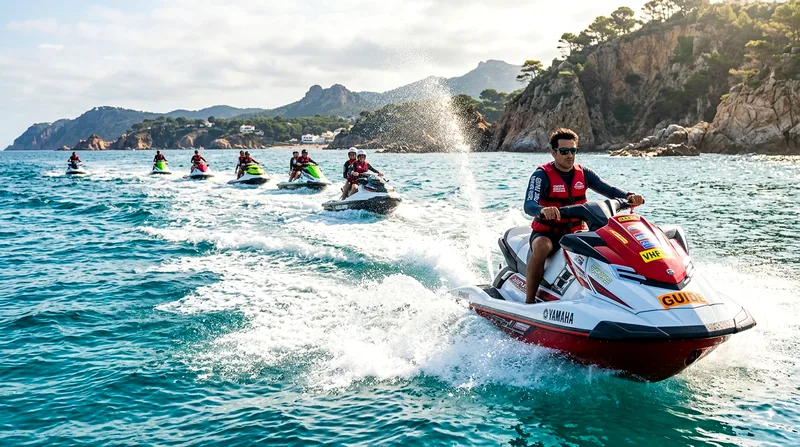
Most tours run as "safaris" — a lead guide on one jet ski, with clients following in single or double-rider machines — rather than unsupervised joyrides. That structure exists partly because Spanish maritime law restricts how far and how fast unlicensed riders can go unsupervised, and partly because it's genuinely easier to enjoy the coastline when someone else is handling navigation and timing.
Why jet skiing appeals to visitors
The appeal is straightforward: it's fast, it's wet, and it gets you off the beach and onto open water in minutes rather than hours. Compared to a half-day catamaran charter out of Puerto Banús, a jet ski tour needs no sailing knowledge, no seasickness tolerance for a long crossing, and no half-day commitment. For travelers staying in Marbella who want one memorable water activity rather than a full day on a boat, it fills that gap well. It's also one of the few water activities on this coast where solo travelers and couples can book without needing a minimum group size, unlike many private boat charters.
Typical routes and coastal landmarks
Standard routes track the shoreline past Puerto Banús's marina, the villas and beach clubs of the Golden Mile, and in some cases as far as the cliffs and quieter bays near Estepona. Guides typically keep riders within sight of land and inside a few hundred meters of the coast, both for safety and because that's where the scenery is — glass-fronted villas, the Sierra Blanca backdrop, and the comparatively open water you don't get closer to the harbor. Longer safaris may run west toward Estepona's quieter coastline, which has fewer swimmers and jet ski traffic than the water directly off Puerto Banús in peak season.
Guided Tours vs Self-Rental Rentals
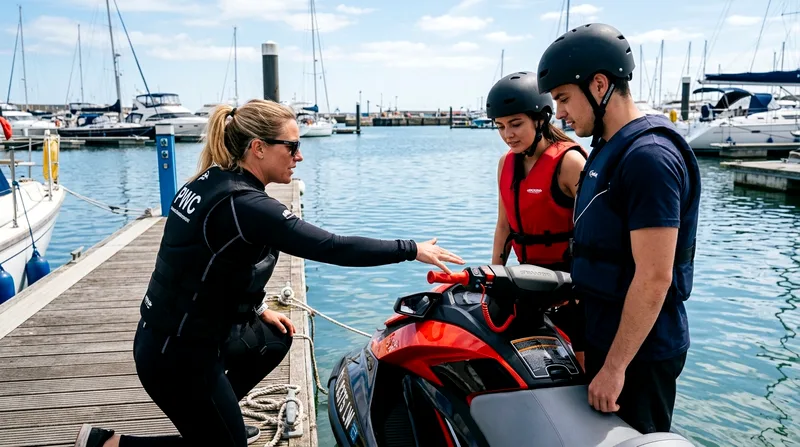
This is the real decision point, and it's worth being honest about the trade-offs rather than assuming one option is obviously better. Guided safaris cost more per person but include route planning, a guide who knows local hazards (swim zones, other boat traffic, shallow patches near the rocks), and — critically — they sidestep the Spanish licensing requirement because the guide is the one legally in charge of navigation. Self-rental gives you full control of the throttle and route, but in Spain that usually requires proof of a valid PWC or boat license, and operators will check documents before handing over keys.
Guided jet ski safaris cost more but need no license and cover more coastline, while self-rental demands valid PWC documentation and sticks to a smaller zone.
Marbella jet ski tour options compared: guided safari vs self-rental
| Option | Typical Duration | License Needed | Typical Price Range (per ski) | Best For |
|---|---|---|---|---|
| Guided safari (Marbella/Puerto Banús) | 45–90 min | No (guide navigates) | €70–€150 | First-timers, couples, dolphin spotting |
| Guided safari (extended, toward Estepona) | 90–120 min | No | €120–€200 | Longer scenic route, calmer water |
| Self-rental (zoned, supervised) | 30–60 min | Yes, valid PWC/boat license | €50–€100 | Licensed riders wanting speed |
| Combo package (jet ski + banana boat/snorkel) | 60–120 min | Depends on jet ski segment | €90–€180 | Mixed-ability groups |
Figures are typical planning ranges based on standard Costa del Sol watersport pricing; always check current prices and license rules before booking.
Guided safari experience and benefits
On a guided safari, you ride in a loose convoy behind an instructor who sets the pace, points out landmarks, and stops the group in calmer water for photos or a dolphin-spotting pause. Sessions typically run 45 minutes to 90 minutes and are priced per jet ski (one or two riders) rather than per person in most cases — worth confirming when you book. The obvious downside: you're not setting the pace, and if you're an experienced rider hoping to open the throttle, a safari capped at a guide's comfort speed will feel restrained. If you've ridden PWCs before and want genuine speed, this format will frustrate you.
Free-roam rental flexibility and thrill factor
Self-rental, where legally available, lets you roam a marked zone unsupervised for a set time block, often 30 to 60 minutes. It's the version with real thrill potential — open throttle, your own line, no convoy pace. But zones are usually smaller than guided safari routes, patrolled by beach lifeguards or harbor authorities, and operators will cut sessions short for reckless riding. I'd avoid any operator who doesn't ask for license proof or doesn't give a safety briefing — that's a red flag on enforcement, not a bargain. Treat a suspiciously cheap rental with suspicion rather than relief.
How to Book and Pricing
Expect guided jet ski tours in Marbella to fall roughly in the €70–€150 range per jet ski for a 30 to 60 minute safari, with longer 90-minute routes toward Estepona priced higher. Self-rental blocks, where offered without a guide, tend to sit lower per half-hour but require that valid license — factor in that if you don't have one, your only legal route is the guided format anyway, which removes some of the "rental is cheaper" math.
Duration options and package types
Typical packages break down into short 30-minute tasters (good for kids over the minimum age riding as a passenger, or first-timers testing the waters, literally), 60-minute standard safaris covering the Puerto Banús–Golden Mile stretch, and 90-minute extended routes reaching toward Estepona's coastline. Some operators bundle jet skiing with a banana boat ride or short snorkel stop — useful if you're traveling with a mixed group of thrill-seekers and more cautious swimmers, less useful if you just want pure jet ski time and resent paying for add-ons you skip.
Booking platforms and operator selection
You can book through aggregator platforms like Viator or check operator listings and reviews on TripAdvisor before committing, or go direct through marina-based watersport operators and boat-activity marketplaces such as Boat2Go. Booking through an aggregator gives you cancellation flexibility and visible reviews; booking direct sometimes gets you a better price but less recourse if the operator cancels on short notice for weather. Always check current prices and availability before you book, since rates shift with season and fuel costs — treat any number here as a planning range, not a quote.
Safety Requirements and Licensing
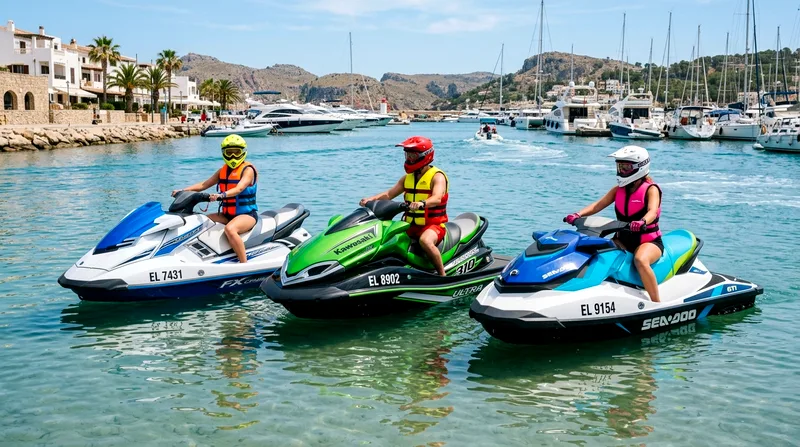
Spain regulates PWC use more strictly than some visitors expect. Riding a jet ski unsupervised in Spanish waters generally requires a recognized license — either a Spanish "título de navegación" category or an International Certificate of Competence accepted by the local authority. Tourists without one are not simply out of luck, though: guided safaris exist specifically to let unlicensed riders experience jet skiing legally, with the licensed guide taking responsibility for the group's navigation.
License and certification requirements
If you hold a valid PWC license from your home country, bring the physical document and ask the operator in advance whether it's accepted — rules on reciprocity vary and operators in Marbella deal with this constantly, so they'll know quickly whether your paperwork clears. Without a license, your only legal option is a guided tour where you ride as a passenger or under direct supervision. Don't expect an operator to simply "look the other way" on this — the fines and liability exposure in Spain are real, and reputable businesses won't risk it.
Age, fitness, and physical requirements
Most operators set a minimum driver age around 16–18 depending on local rules, and a lower minimum age for passengers riding behind an adult. There's usually also a maximum weight limit per jet ski (commonly around 150–160kg combined for two riders) and pregnant travelers or anyone with recent back or neck surgery is typically advised against riding. Life jackets are mandatory and provided — if an operator doesn't hand you one before you leave the dock, that's a reason to walk away, not a shortcut worth taking.
Best Time to Go Jet Skiing
Jet ski tours run roughly from April through October on the Costa del Sol, with the Mediterranean calm enough and the water warm enough to make the ride comfortable rather than bracing. Outside that window, several operators close entirely or cut to weekends only, and sea conditions are more likely to force cancellations.
Seasonal weather and water conditions
June through September gives the most reliable flat-water conditions and the warmest sea temperatures, which matters more than it sounds — a choppy sea turns a jet ski ride from fun into fatiguing fast. Spring (April–May) and early autumn (October) can still work well and come with fewer crowds on the water near Puerto Banús, but wind patterns are less predictable, so same-day cancellations are more common. Compare this to Málaga or Nerja further along the coast, where exposed stretches can get choppier than Marbella's more sheltered bay.
Peak vs off-season considerations
July and August bring the highest demand, the most jet ski and boat traffic near Puerto Banús, and the highest prices — book a few days ahead rather than walking up. Shoulder months (May, June, September) often get you the same weather quality with a quieter route and sometimes a small price break. If you're flexible, early morning slots in peak season avoid both the crowds and the midday heat, and guides report calmer water before the afternoon boat traffic builds up.
Nearby Coastal Add-Ons
A jet ski tour pairs naturally with other short water activities along this stretch of Spain, and plenty of visitors build a half-day around it rather than treating it as a standalone booking.
Complementary water activities
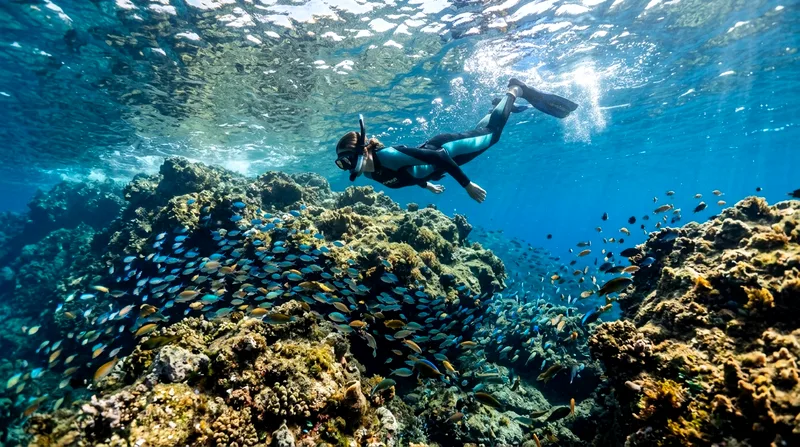
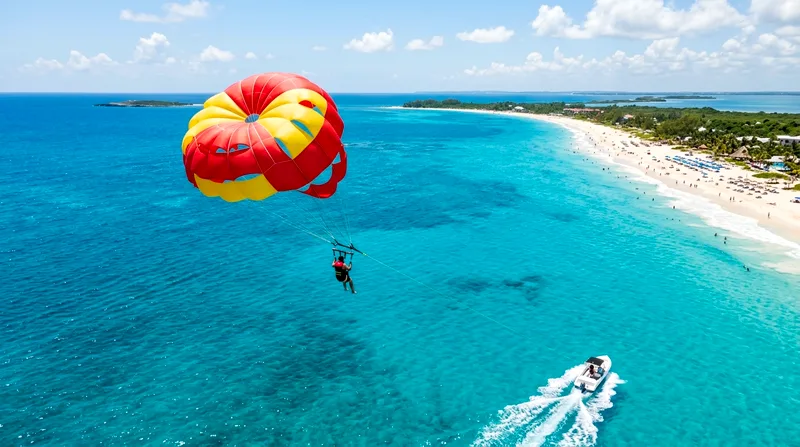
Parasailing and flyboarding are commonly offered at the same beach clubs that run jet ski safaris, and a short snorkel stop near the rockier sections toward Estepona is a common add-on for guided tours with a slower pace. If you want a longer day on the water without the physical intensity of a PWC, a catamaran or RIB boat trip out of Puerto Banús or Marbella marina is the natural alternative — less adrenaline, more comfort, and a better fit if seasickness or physical strain is a concern.
Beach and coastal attractions
Puerto Banús marina itself is worth the walk before or after your ride — the yacht-watching is free and gives a sense of scale for the coastline you just covered on a jet ski. Further along, Estepona's old town and seafront promenade make a calmer counterpoint to the speed of the water activity, while Benalmádena and Fuengirola to the east offer their own watersport scenes if you're staying outside Marbella proper and comparing where to base your trip.
Frequently asked questions
Do I need a license to rent a jet ski in Marbella?
For unsupervised self-rental, yes — Spain requires a valid PWC or boat license (or an accepted International Certificate of Competence) to pilot a jet ski alone. If you don't have one, book a guided safari instead, where a licensed guide handles navigation and you ride under their supervision, which is fully legal without personal certification.
How much does a jet ski tour cost in Marbella?
Guided safaris typically run €70–€150 per jet ski for 45–90 minutes, often priced for one or two riders sharing the machine rather than per person. Extended routes toward Estepona or longer 90–120 minute sessions push toward €120–€200. Self-rental for licensed riders tends to be cheaper per half-hour but confined to a smaller zone. Always confirm current pricing directly with the operator or booking platform before paying.
What is included in a guided jet ski safari?
A typical safari includes the jet ski rental itself, a wetsuit or splash gear, a mandatory life jacket, a safety briefing, and a guide leading the group along a set coastal route — usually Puerto Banús toward the Golden Mile or further west toward Estepona. Fuel and basic insurance are generally included; photos, extra activities like snorkeling, or hotel transfers usually are not unless specified.
Can I see dolphins on a jet ski tour?
It's possible but not guaranteed. Bottlenose dolphins are regularly sighted in the waters off the Costa del Sol, including the stretch between Marbella and Estepona, and guides on longer safaris sometimes pause the group if dolphins are spotted nearby. Treat it as a pleasant possibility rather than a booked feature — no operator can promise a sighting on a given day.
What is the best time to go jet skiing in Marbella?
Late spring through early autumn — roughly May to September — gives the most reliable combination of warm water and calm sea conditions. Early morning slots in July and August avoid both the afternoon heat and the busiest boat traffic near Puerto Banús. Outside April–October, fewer operators run tours and cancellations due to wind are more common.